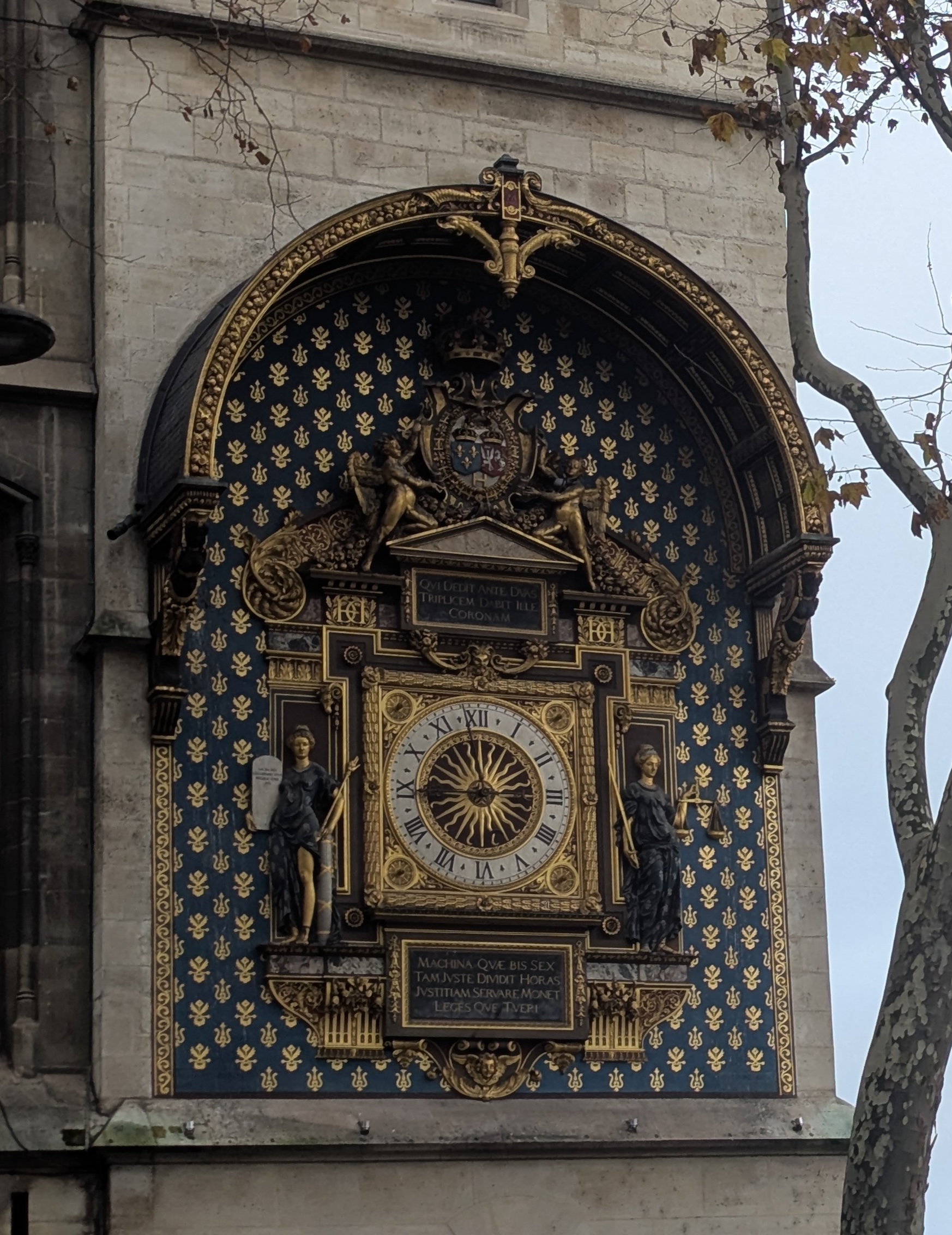
In the center of Paris, at her beating heart, burns a furnace of fire and flame. A white-hot mass with a gravitational pull on those susceptible to her charm. This magnetic force draws you in, warms your soul, and if you are lucky enough to surrender to it, you become one with her. And when you leave, you leave a part of yourself behind.
“If you are lucky enough to have lived in Paris as a young man, then wherever you go for the rest of your life it stays with you, for Paris is a movable feast.”
Ernest Hemingway
Three times I visited Paris in the last year, and three times I left something of myself there. In March, I flew into Paris before driving across France on my way to Rust, Germany, for Cloudfest. Shortly after arriving, I received word that my brother-in-law had passed away unexpectedly. I reversed course and drove across France for the second time in as many days.

In July, my wife, daughter, and I spent a week immersed in libraries, cafés, museums, and boat rides along the Seine before continuing on to the Mediterranean in the south of France. It was a family vacation that left its mark on all of us, and one I’ll carry with me for the rest of my life.
In December, I returned again, this time for the Open Source Experience. A few days with people who believe, deeply, in building a better Internet through open source technology.
That third trip in 2025 marked the tenth time I’ve left a piece of myself in Paris. Lately, I’ve started to believe that the only way to recover those scattered pieces is to return. Maybe permanently. Despite my obvious obsession with the city, this essay isn’t about Paris, or wrestling with my identity as a New Yawk’er. It’s about open source — the human-made world we’ve built together on the internet — and our collective right to access it.
The Right to the City
Cities are constructed over centuries by thousands of architects, planners, builders, and artists, and then inhabited by millions. They are never finished. They are always in motion. We all have rights to the city. Full of museums, libraries, infrastructure, and shared spaces, cities represent an investment of money, time, labor, and sacrifice. Ideally, they make us better than the sum of our parts.
The sacrifices we make should mean something. We cut down trees and drive wildlife away. We burn forests and melt stone to raise monuments meant to outlast us. Because of that, I believe humans don’t just have a right to the cities they build, they have a responsibility to them. A responsibility to protect them, to govern them wisely, to repair what breaks, and to enjoy what’s been created.
The Internet shares this quality. Like cities, it is something we all have access to. It allows beauty and knowledge to be created, recorded, shared, and spread. It inspires culture, creativity, and ambition. But it also has an underbelly. Corruption. Exploitation. Dark alleys filled with predatory behavior. Rent-seeking intermediaries. Marketing pollution plastered across every available surface. Digital billboards blocking the view.
At its best, the Internet resembles a great city, rich with culture, layered with history, and shaped by people who care. At its worst, it reflects the same forces that hollow out neighborhoods and turn public spaces hostile. Greed. Anger. Indifference.
And yet we return. We fight for our cities. We invest in them. We believe in them. Because at their core, they speak to something fundamental about human nature: the need to gather, to build, and to create something that outlasts us.
Which brings me back to Paris, and to that furnace at her center. What I found there in December wasn’t just architecture or atmosphere. It was community. People who understand that what we build together, whether streets or software, belongs to all of us.

Open Source Commons as the City We Build Together
Open source commons mirror many of the qualities that make cities great. It draws people from around the world and concentrates creativity, innovation, and culture. Just as cities attract builders and dreamers, open source attracts people who believe in collective progress over individual gain. Many dedicate years of their lives to projects they may never personally profit from, driven by the belief that what they’re building matters.
Governance follows the same pattern. Cities rely on laws, norms, and institutions to protect their residents and infrastructure. Open source and the commons rely on licenses, foundations, and community guidelines. These structures don’t limit freedom. They enable it. They ensure shared work remains shared.
That belief is why I’ve contributed to the Secure Hosting Alliance. It’s a chance to bring even competing companies together to protect the Internet we all rely on. Cities don’t survive without cooperation across interests, and the open source commons are no different.
Disagreements are inevitable. City goers argue with themselves constantly. But when a real threat emerges, people rally. Open source behaves the same way. When vulnerabilities surface or infrastructure is attacked, competitors collaborate. Information is shared. Priorities shift. Some things matter more than rivalry.
That’s the real strength of open source commons. Not just as a way to write software, but as a model of shared responsibility. It’s something we maintain, defend, and pass forward, just like a city worth living in.

The Tourist Problem
Tourists can be good for cities. They can absorb culture, learn from it, and carry it home. Respectful visitors leave changed. They take pieces of what they’ve experienced and plant them elsewhere.
But tourism can also overwhelm. France is experiencing this now. Workers at the Louvre recently went on strike, pointing to visitors who treat one of humanity’s greatest cultural institutions as little more than a backdrop for photos. They crowd the halls, they ignore the rules, they take without giving back.
Open source has its own version of this problem. There are tourists who treat the open source commons as something to extract from, not contribute to. They profit from volunteer labor without acknowledging the cost. They take freely, but give nothing back.
These actors aren’t dangerous because they’re loud or destructive in obvious ways. They’re dangerous because they drain energy over time. A direct attack is easy to see. You can respond to it. You can organize against it.
Slow erosion is harder. It wears people down. Maintainers burn out. Contributors drift away. Progress stalls. What was built through collective effort starts to decay, not through conflict, but through neglect disguised as participation.
The Open Source Experience Conference
It was an absolutely amazing congregation of open source products and companies. Talented people, thoughtful talks, and real conversations, all accelerated by being in the same place at the same time.
But it also reflected the very problems open source faces more broadly. Cost-cutting and revenue extraction were visible everywhere.
There were logistical issues from the start. Language flags were inconsistent, making it difficult to know which sessions I would understand. The venue was underground, with no cell service. Internet access was reserved for vendors. Water was scarce. Food wasn’t provided to attendees, though meals were openly transported past hungry attendees to vendor areas. Pop-up cafés and bars were restricted to speakers and sponsors.
The irony was hard to miss. A conference centered on openness and collaboration created clear tiers of access. Attendance was free, but participation felt conditional. That decision wasn’t accidental. Free tickets drove larger crowds, which justified higher vendor fees.
It’s a familiar pattern. The language of community is used to justify systems that extract value while offering little in return. Open source ideals are invoked while access is quietly restricted. Free to attend, but not free to belong.
The most important takeaway for me wasn’t from a keynote or panel. It was the reminder that open source needs to be defended not only from obvious threats, but from those who speak its language while undermining its foundations. The danger often comes from inside the walls.
And yet — walking out of those underground halls and back into Paris, I felt something shift. The city didn’t care about the irony. It just kept going. Centuries of construction and contradiction, and still the furnace burns.
The City That Never Finishes
So I return to Paris, at least in thought. To the furnace at her center that continues to burn and reshape those drawn to it.
Cities are never finished. They adapt. They change. They respond to the needs of the people who inhabit them. The Paris I visited in March wasn’t the same city I saw in July or December. Streets changed. Buildings shifted. Life moved on.
Open source commons can do the same. It evolves through stewardship and care. It depends on people willing to defend its values, maintain its systems, and pass it forward.
The people who do that work aren’t unlike the figures we celebrate in history. Builders, thinkers, and advocates who understood that what they created mattered only insofar as it served others.
The furnace still burns. Somewhere in that fire, the pieces I’ve left behind are being reshaped into something stronger. Something more deliberate. A reminder that the cities we build, whether of stone or code, endure only as long as we’re willing to care for them.
I don’t know whether I’ll return to Paris for good. But I do know this: what we build together is worth protecting. The open source commons, like Paris, demands more than admiration. It requires commitment.
And if we’re lucky enough to feel that pull, to answer it, then wherever we go and whatever we build, that responsibility travels with us — for open source, like Paris, is a movable feast.

Leave a Reply